
What is the Qualcomm Dragonwing IQ9




The Qualcomm Dragonwing™ IQ9 Series is a family of industrial and embedded computing platforms designed to accelerate the development of edge AI, computer vision, robotics, multimedia, and IoT applications. Built around Qualcomm's heterogeneous computing architecture, the IQ9 combines high-performance CPU cores, AI acceleration, advanced multimedia engines, and connectivity capabilities into a single System-on-Chip (SoC).
The Dragonwing IQ9 series targets developers and product manufacturers who require efficient on-device processing, low-latency decision making, and hardware-accelerated multimedia capabilities while maintaining the power efficiency expected in embedded systems.
Terminology
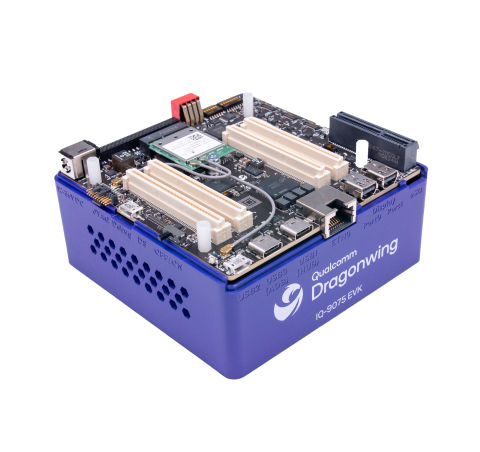
Table 1 presents the terminology regarding the Qualcomm products used throughout this documentation.
| Term | Meaning |
|---|---|
| Dragonwing | Qualcomm brand for industrial and embedded platforms |
| IQ9 Series | Product family for high-compute industrial edge applications |
| IQ-9075 | A specific IQ9 Series module |
| IQ-9075 EVK | Evaluation platform containing module, mainboard, cooling, storage, connectivity, and expansion |
Platform Overview
At its core, the IQ9 integrates multiple specialized processing subsystems that work together to execute diverse workloads:
- Multi-core CPUs for general-purpose application execution (8-core ARM CPU).
- GPU (Graphics Processing Unit) for graphics rendering and parallel computation (Adreno 663) with support of OpenGL ES, Vulkan, OpenCL.
- NPU (Neural Processing Unit) for AI inference and machine learning acceleration (Hexagon DSP).
- VPU (Video Processing Unit) for hardware-accelerated video encoding and decoding.
- ISP (Image Signal Processor) for camera processing and image enhancement.
- DSP and auxiliary accelerators for signal processing and specialized workloads (Hexagon DSP).
- High-speed interfaces for cameras, displays, networking, storage, and peripheral devices.
Table 2 presents a summary of the IQ-9075 hardware features.
| Category | IQ-9075 Specification |
|---|---|
| CPU | Octa-core Qualcomm Kryo™ Gen 6 CPU |
| CPU Frequency | 2.1 GHz |
| GPU | Qualcomm Adreno™ 663 |
| GPU Frequency | Up to 530 MHz |
| AI Accelerator | Dual Qualcomm Hexagon™ Tensor Processors |
| AI Performance | Up to 100 INT8 TOPS (50 TOPS variants available) |
| Memory | Up to 36 GB LPDDR5 with inline ECC |
| Memory Frequency | Up to 3200 MHz |
| Storage | NVMe support through PCIe |
| Camera Support | Up to 16 concurrent cameras |
| Camera Interfaces | 4× MIPI CSI (D-PHY 1.2 / C-PHY 2.0) |
| Video Decode | Up to 1× 8K@60fps or 4× 4K@60fps |
| Video Encode | Up to 2× 4K@60fps |
| Supported Codecs | AV1, H.264, H.265/HEVC, VP9, MPEG-2 |
| Display Interfaces | MIPI DSI and DisplayPort/eDP |
| Display Support | Up to 5× 4K displays (configuration dependent) |
| Ethernet | Up to 2× 2.5 GbE interfaces |
| Wireless Connectivity | Wi-Fi 6E and Bluetooth 5.x (platform dependent) |
| PCIe | 1× PCIe Gen4 x4 and 1× PCIe Gen4 x2 |
| USB | USB 3.1 Gen2 and USB 2.0 |
This heterogeneous architecture enables applications to distribute workloads across the most appropriate processing engine, improving performance and power efficiency.
What Is the Dragonwing IQ9 Used For?
The Dragonwing IQ9 is intended for applications that require significant compute capabilities at the edge while maintaining embedded-system constraints such as power efficiency, thermal limits, and reliability.
Common use cases include:
- Edge AI inference
- Computer vision systems
- Smart cameras
- Video analytics
- Industrial automation
- Robotics
- Autonomous systems
- Human-machine interfaces (HMI)
- Multimedia streaming and processing
- Intelligent IoT gateways
For embedded Linux developers, the Dragonwing IQ9 provides a modern heterogeneous computing platform with hardware-accelerated multimedia pipelines for video capture, encoding, decoding, and transformation, AI acceleration through dedicated neural processing hardware, support for multiple cameras and high-resolution video streams, Linux-based development workflows and standard toolchains and integration with industry-standard frameworks such as GStreamer and AI runtime libraries.
Efficient Dragonwing applications typically distribute workloads across CPUs, GPUs, NPUs, VPUs, and ISPs. Understanding how these subsystems interact is key to achieving optimal performance, latency, and power consumption.
FAQ
- How many TOPS does IQ-9075 provide?
- Qualcomm publishes configurations up to 100 dense INT8 TOPS.
- What operating systems can run on the IQ-9075 EVK?
- This guide covers Qualcomm Linux built with Yocto and an Ubuntu image. Features and package versions differ by release.
- Can CPU, GPU, VPU, ISP, and NPU work at the same time?
- They can participate in one heterogeneous pipeline, but sustained concurrency depends on memory bandwidth, thermal limits, power policy, drivers, and scheduling.
Related pages
- Qualcomm Dragonwing Technical Guide/Introduction/Why the Qualcomm Dragonwing IQ9
- Qualcomm Dragonwing Technical Guide/Carrier Boards/IQ-9075 EVK
- Qualcomm Dragonwing Technical Guide/Multimedia Support
- Qualcomm Dragonwing Technical Guide/Multimedia Support/Acceleration
References